
Commercial Food Truck Insurance in Ottawa
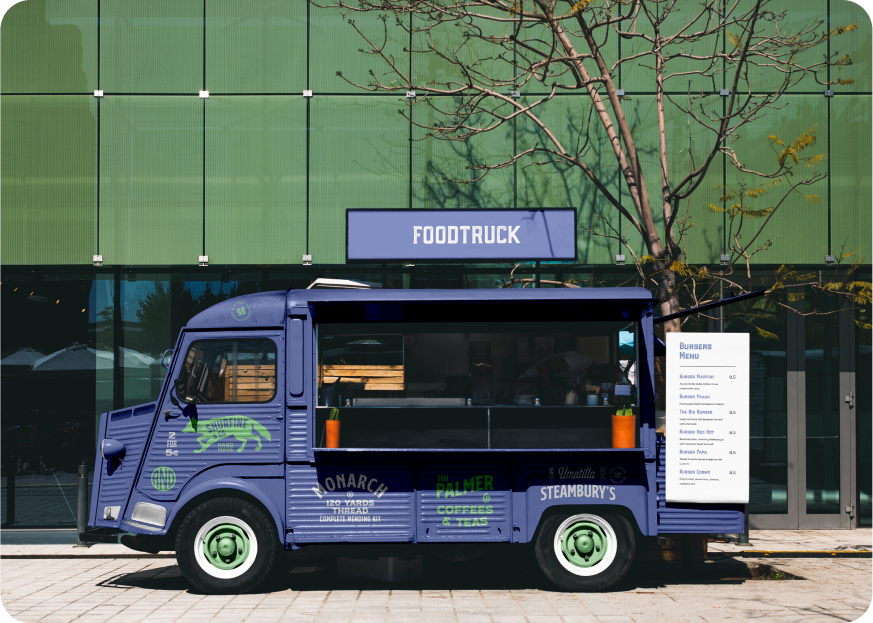
Your food truck is a kitchen, a storefront, and a vehicle all at once, and it needs insurance that covers all three. Commercial food truck insurance combines the mandatory auto coverage for a truck driven on Ontario roads with the liability, product, and equipment protection your business relies on every service day.
Whether you’re parked at an Ottawa festival, a downtown lunch spot, or a market in Carp, here’s what a proper policy includes, what the coverage typically costs in Ontario, and what permits and event organizers will ask you to prove.
Discover All Our
Insurance Services

Personal Insurance

Commercial Insurance

Farm Insurance
What Is Commercial Food Truck Insurance?
Commercial food truck insurance is a package policy that can protect a mobile food business against vehicle accidents, customer injury and illness claims, and damage to the truck and the equipment inside it. It usually bundles commercial auto insurance, commercial general liability (CGL), product liability, and commercial property coverage into a single policy built around how and where you operate.
A standard personal auto policy won’t do the job. Once a vehicle is used to earn income, insurers treat it as a commercial risk, and a claim on a personal policy can be denied. The same goes for a home policy and your cooking equipment. Food trucks sit inside the broader hospitality insurance market, and the right package reflects everything from your fryers to your festival schedule.

What Insurance Do You Need for a Food Truck in Ottawa?
Every food truck that drives on public roads needs commercial auto insurance by law, and nearly every operator also needs liability, product, and equipment coverage to secure permits and event bookings. Here’s the breakdown.
| Coverage Type | What It Protects | Who Needs It |
| Commercial Auto | Collisions, injuries, and damage involving the truck on the road. | Mandatory for any driven truck under Ontario’s Compulsory Automobile Insurance Act. |
| Commercial General Liability (CGL) | Customer slips, burns, and third-party property damage at your service window. | Effectively required; events, cities, and commissaries ask for proof. |
| Product Liability | Foodborne illness and allergic reaction claims from food you serve. | Every operator serving food or drink. |
| Commercial Property / Equipment | Cooking equipment, refrigeration, generators, signage, and inventory. | Operators with meaningful investment in the truck’s fit-out. |
| Business Interruption | Lost income while the truck is out of action after an insured loss. | Operators who can’t absorb weeks without revenue. |
Commercial Auto Insurance: Mandatory for a Driven Truck
If your food truck moves under its own power on public roads, Ontario law requires auto insurance, and because the vehicle earns income, it must be a commercial policy. A towed food trailer is different: it's generally covered for road risks under the towing vehicle's policy, but the trailer itself and its contents still need their own property coverage. ONA can also fold multiple vehicles into one auto, fleet, and garage policy as your operation grows.
Commercial General Liability: What Events and Cities Expect
CGL responds when a customer trips over your cable run, gets burned at the pickup window, or when your awning damages someone's property. Many Ontario festival and event organizers, as well as commissary kitchens, require vendors to carry at least $1 million in CGL and to provide a certificate of insurance naming them as an additional insured. The City of Ottawa goes further and requires proof of at least $2 million in commercial general liability coverage, naming the City of Ottawa as an additional insured, to license a mobile refreshment vehicle, per the City of Ottawa's published vending requirements. A dedicated commercial general liability policy is the backbone of any food truck package.
Product Liability for the Food You Serve
Product liability covers claims that the food or drink you served made someone sick, triggered an allergic reaction, or contained something it shouldn't have. For a business whose entire product is consumed on the spot, this is arguably the most important extension on the policy. Insurers will ask about your menu, since higher-risk items like raw seafood can affect underwriting.
Property Coverage for Your Equipment
Your truck's value isn't the chassis, it's the build-out: grills, fryers, refrigeration, generators, point-of-sale hardware, and stock. Commercial property coverage protects that investment against fire, theft, and vandalism, whether the truck is parked overnight, in storage for the winter, or set up at an event. Cooking equipment and fire risk go hand in hand in a small mobile kitchen, so ask your broker how a fire suppression system affects your coverage.
Business Interruption Coverage
If a fire or theft takes your truck off the road in July, the lost revenue can hurt more than the repair bill. Business interruption insurance replaces income while you rebuild, which matters for a seasonal business earning most of its revenue between May and October.

How Much Does Commercial Food Truck Insurance Cost in Ontario?
Commercial food truck insurance in Ontario commonly runs between about $2,000 and $5,000 per year for a full package, with a standalone $2 million CGL policy often falling in the $500 to $1,000 per year range, based on figures published across the Canadian insurance market.
Commercial auto is usually the largest share of the total. Factors that move your premium include:
- The truck itself. Age, value, size, and whether it’s a driven truck or a towed trailer.
- Where and when you operate. Busy urban locations, high-traffic festivals, and winter driving all affect risk.
- Your menu. Deep fryers, open flames, and allergen-heavy or raw items increase exposure.
- Equipment value. More build-out means more property coverage.
- Driving records. Yours and anyone else who drives the truck.
- Coverage limits and deductibles. A $2 million CGL limit and a low deductible cost more than the minimums.
Permits, Events, and Proof of Insurance
Insurance and permits go hand in hand for mobile vendors in Ontario. Municipalities license food trucks and generally require proof of liability insurance as part of the application; Ottawa’s Mobile Refreshment Vehicle licence, for example, requires a certificate showing $2 million in CGL that names the City of Ottawa as an additional insured. Surrounding municipalities have their own vending and street-food licensing rules, so confirm the insurance requirement for each place you plan to park.
Event organizers add another layer. Expect festivals, markets, and private event hosts to ask for a certificate of insurance, often with themselves named as additional insured, sometimes with only a few days’ notice. A broker who knows the drill can issue certificates quickly so paperwork never costs you a booking.
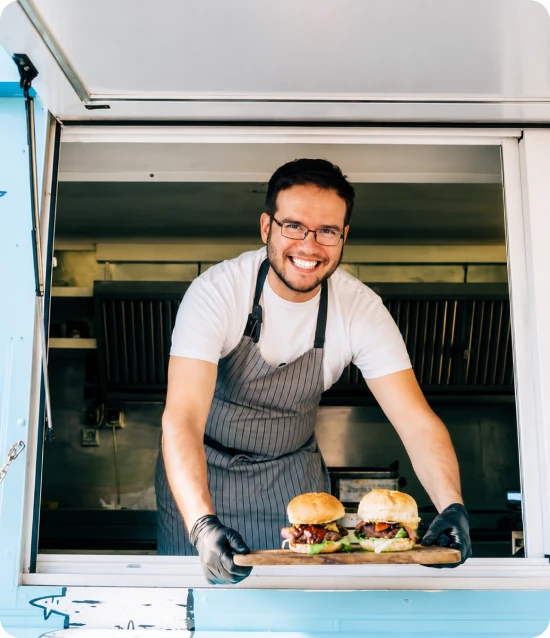

Food Truck Insurance in Ottawa: Local Coverage That Keeps Up
ONA has insured Ottawa-area businesses since 1961, and food trucks are a natural fit for a brokerage with deep roots in the local food and event scene. From ByWard Market lunches to festival season on the canal, our brokers understand the venues, the seasonal rhythm, and the certificates organizers ask for. With five offices across Ottawa, Manotick, Almonte, Russell, and Orleans, our insurance brokers in Ottawa are nearby when you need a certificate today, not next week.
Because ONA is an independent brokerage, we shop multiple insurers to build coverage around your operation, whether that’s a single coffee cart or a small fleet. Many operators pair their truck policy with broader small business insurance.
Operators who also run a bricks-and-mortar location can coordinate the truck policy with restaurant insurance coverage so nothing falls between two policies, and you can explore the full range of options on our commercial insurance hub.
Frequently Asked Questions
Full commercial food truck insurance packages in Ontario commonly cost between about $2,000 and $5,000 per year, while a standalone $2 million commercial general liability policy is often in the $500 to $1,000 per year range, based on published Canadian market figures. Your actual premium depends on the truck, your menu, where you operate, and your coverage limits, so ask a broker for a quote based on your operation.
A food truck needs commercial auto insurance, commercial general liability, product liability for the food you serve, and property coverage for the truck’s equipment. Business interruption coverage is a smart addition for operators who depend on a short busy season. Many events and municipal permits also require proof of liability coverage, so the policy is a licensing tool as much as a safety net.
Yes. Any food truck driven on public roads in Ontario must be insured under the province’s Compulsory Automobile Insurance Act, and because the vehicle is used for business, it needs a commercial auto policy rather than a personal one. Towed trailers are generally covered for road risks by the towing vehicle’s policy, but the trailer and its contents still need separate property coverage.
Many Ontario event organizers and commissary kitchens require at least $1 million in commercial general liability coverage, and the City of Ottawa requires proof of $2 million in CGL for a Mobile Refreshment Vehicle licence. Many operators carry $2 million as standard so they never have to turn down a booking or permit application. Your broker can help you match your limit to the venues and cities where you work.
Your truck works hard all season, and the right coverage means one bad day doesn’t end it. The insurance brokers at Oegema, Nicholson & Associates have been helping Ottawa families and businesses find the right protection since 1961. Get a free quote today.
What Our Clients Are Saying
Real stories from people who trust
Oegema, Nicholson & Associates Insurance

“One call to Oegema, Nicholson & Associates is all it took. After our basement flooded, within a day or two they had a crew cleaning everything up, taking down the drywall and itemizing everything to be cleaned, thrown out or restored. They had everything in place for us in a timely manner and were extremely patient with me as they talked me through the process and waited for me to make decisions.”

Jennifer Parks, Stittsville, Ontario


“I’ve been dealing with ONA for over 20 years with my personal insurance, as well as our commercial insurance, and I know I can rely on them for great customer service, and prompt responses. I feel confident not only referring them to my employees, but to our customers as well.”

Charlene Brunet, Butler Group of Company
“ONA helps me with my personal insurance and my business insurance. They are my one stop shop when it comes to insurance and group benefits. I know I’m covered in all areas. Great friendly service and knowledgeable staff!”

James Carriveau, President, Exact Interlock and Exact Properties
“It’s always a pleasure to deal with Oegema, Nicholson & Associates, and I can depend on them for all my insurance needs. I have been a client for several years and whether it’s regarding my personal insurance, or anything to do with our employee benefits or commercial needs, I know I’m taken care of.”

Rhonda, Capital Dodge
“I would like to thank Carol for everything she has done for me and my family over the years. It is my honest belief that we would not be in the position we are in if it was not for her guidance, expertise and honesty. We can’t begin to thank her enough.”

Tim
Service Areas
Insuring Individuals and Businesses in Ottawa and Beyond
Insurance Brokers in Ottawa
- Phone
Insurance Brokers in Manotick
- Phone
Insurance Brokers in Almonte
- Phone
Insurance Brokers in Russell
- Phone
Insurance Brokers in Orleans
- Phone
Contact Us