


In This Article
- Ottawa’s Storm Track Record
- What a Standard Policy Usually Covers
- The Two Gaps That Catch Most Homeowners
- Sewer Backup and Overland Water Are Not the Same Thing
- Trees, Fences, and Detached Structures
- What to Do in the First 48 Hours After a Storm
- Frequently Asked Questions
After a summer storm, whether your home insurance pays out usually depends on where the water came from. A standard Ontario policy covers damage caused by wind, hail, and fallen trees automatically, but the two water-related causes most likely to flood an Ottawa basement are not covered unless you have specifically added them. That gap is the most common storm claim problem we see with Ottawa homeowners.
Ottawa’s Storm Track Record
The September 2018 tornadoes tore through Dunrobin and Arlington Woods. The May 2022 derecho swept across the city with damaging straight-line winds, taking down trees and power lines across entire neighbourhoods.
Between those events, Ottawa gets frequent summer thunderstorms with heavy, short-duration rainfall. That is the pattern that overwhelms storm sewers and backs water up into basements. Canada Day 2026 is the clearest recent example. Ottawa recorded 118 mm of rain in a single day, a record for July 1, and the City described it as a one-in-200-year rainfall event. Roughly 1,900 basements flooded.
What a Standard Policy Usually Covers
Standard policies usually cover damage from the main storm perils.
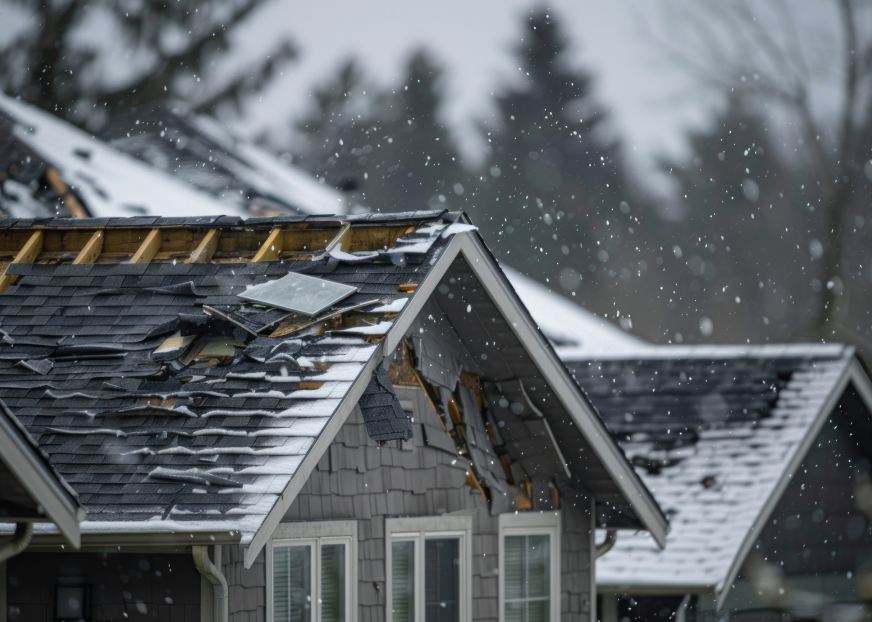
Wind damage is generally covered, including shingles lifted off the roof and siding torn away.
Hail damage is generally covered, including damage to the roof and exterior surfaces.
Falling objects, such as a tree or large branch that comes down on the house, garage, or fence, are generally covered for the damage they cause, including removing the tree from the insured structure. Clearing the fallen tree from the rest of the property is generally not covered.
Water that enters through a storm-created opening, such as rain through a hole the wind just made in the roof, is usually covered, because the wind damage is the originating peril.
A standard policy covers water that enters because a covered peril opened the building. It treats water that arrives from the ground or the municipal sewer system very differently, and that difference is where the coverage gaps appear.
The Two Gaps That Catch Most Homeowners
Most homeowners have this backwards.
Sewer backup is not covered by a standard Ontario home policy. It is an optional endorsement you have to add.
Overland water is not covered by a standard Ontario home policy either. It is also an optional endorsement, and a different one.
The two scenarios most likely to put water in an Ottawa basement during a summer storm are the two a basic policy excludes by default. Wind and hail, which homeowners tend to worry about more, are generally already included.
If you have not specifically added these endorsements, you probably do not have them. Check your home insurance declarations page or ask your broker to confirm.
Availability and terms vary by property, and homes in higher-risk areas may face limits on what can be added. Your broker can tell you what is available for your address.
Sewer Backup and Overland Water Are Not the Same Thing
People use these terms interchangeably, but they are different coverages. Having one does not give you the other.
| Coverage | What it responds to | Typical trigger |
| Sewer backup | Water entering through the sewer, septic system, or drains, including sump pump failure or overflow | Municipal system overwhelmed, sump pump fails during a power outage |
| Overland water | Surface water entering the home at ground level | Heavy rainfall pooling and running into the house, rapid snowmelt, an overflowing waterway |
A single storm can trigger both, so it is worth considering them together rather than choosing one.
Condo owners face the same issue. Your corporation’s policy covers the building, but water that enters your unit and damages your own improvements and belongings falls under your own condo insurance, where the same endorsements apply.
A cottage or seasonal home carries its own exposures, particularly if it sits unoccupied during storm season.
Trees, Fences, and Detached Structures
A tree that falls on your house is generally covered for the damage to the structure. A tree that falls in your yard and hits nothing is a different question, and removal costs may be limited or not covered, depending on the policy.
Damage from your neighbour’s tree falling on your house is usually a claim under your own policy, not theirs, unless negligence can be established. Chasing a neighbour’s insurer is generally slower and less certain than claiming on your own coverage.
Fences, sheds, and detached garages are typically covered, but often under a separate sub-limit set as a percentage of the main dwelling coverage rather than the full amount.
What to Do in the First 48 Hours After a Storm
- Make sure it is safe. Downed power lines, standing water near electrical panels, and compromised structures come first.
- Prevent further damage where you safely can. Most policies require you to take reasonable steps to mitigate, such as tarping a roof. Keep the receipts.
- Photograph everything before you clean up. Take wide shots and close-ups, and do not throw damaged items out until they are documented.
- Call your broker before starting a claim. An independent broker can tell you whether the loss is likely covered, which shapes what you do next.
- Keep a written log of who you spoke to and when.
Frequently Asked Questions
Does home insurance cover storm damage in Ontario?
Standard home insurance in Ontario generally covers damage caused by wind, hail, and falling objects such as trees, along with water that enters through an opening a storm created. It generally does not cover sewer backup or overland water, which are optional endorsements you have to add separately.
Is sewer backup covered by home insurance in Ontario?
No, not by default. Sewer backup is an optional endorsement on Ontario home policies, so unless it was specifically added you likely do not have it. It covers water entering through sewers, septic systems, and drains, and it typically extends to sump pump failure or overflow.
What is overland water coverage?
Overland water coverage responds to surface water entering your home at ground level, such as heavy rainfall pooling around the foundation, rapid snowmelt, or an overflowing waterway. Like sewer backup, it is an optional endorsement rather than standard coverage, and it is a separate coverage from sewer backup.
Who pays if my neighbour's tree falls on my house?
Usually your own insurance policy responds, not your neighbour’s. Liability generally only shifts to the neighbour where negligence can be established, such as a tree they knew was dead and failed to deal with. Claiming on your own coverage is typically faster and more certain.
Does insurance cover food spoiled during a power outage?
It depends on the policy, and this is one worth checking specifically. Some policies include limited coverage for spoilage following a power interruption, and some treat it as an optional add-on. The limits involved are usually modest.
Should I claim for storm damage or pay out of pocket?
That depends on the size of the loss relative to your deductible and your own circumstances. Reporting a loss and formally claiming are not the same step, so speaking to your broker first is worthwhile. They can walk through the options with you before anything is filed.
Confirming your coverage before storm season is far easier than discovering a gap after a claim. The insurance brokers at Oegema, Nicholson & Associates have been helping Ottawa families and businesses find the right protection since 1961. Get a free quote today.
We serve Ottawa, Manotick, Almonte, Russell, and Orleans. See our Ottawa insurance brokers page for local contact details.